
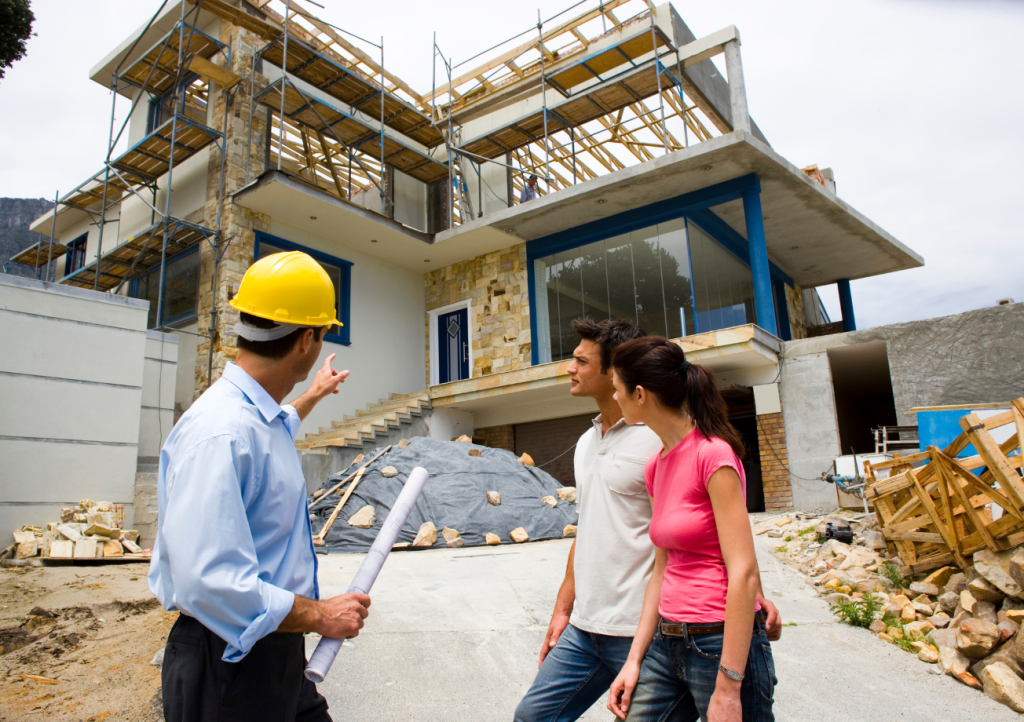
A good custom home builder will match your communication preferences while keeping the process organized, proactive, and documented. That typically means a combination of scheduled check-ins, site meetings at key milestones, photo updates showing progress, and clear decision deadlines so your selections don’t hold up construction. The specifics will vary by builder and by your personal style, but the standard should be the same: you should never have to wonder what’s happening with your build.
Here’s what to expect — and what to demand — from your builder’s communication process.
Scheduled Check-Ins — Weekly or Bi-Weekly
Most custom home clients prefer weekly or bi-weekly check-ins with their builder or project manager. These can be phone calls, video calls, or in-person meetings depending on your proximity to the job site and what stage of construction you’re in. The purpose is straightforward: here’s what happened this week, here’s what’s happening next week, and here’s anything that needs your attention or a decision.
During active phases like framing or finish work, weekly check-ins are the standard. During slower phases — waiting on permits, curing concrete, or holding for inspections — bi-weekly may be more appropriate. The frequency matters less than the consistency. A builder who checks in every week without fail gives you confidence the project is being managed. A builder who goes silent for two weeks and then floods you with questions has lost control of the communication.
Site Meetings at Key Milestones
Certain points in the build are worth seeing in person. These are the milestones where decisions become permanent and where seeing the space in three dimensions — not just on paper — helps you confirm things are right. Most builders schedule on-site walkthroughs at:
- Pre-construction — walking the lot to confirm home and pool placement, driveway location, and tree preservation
- Foundation — verifying the footprint before walls go up
- Framing — the most important walkthrough, where you can see room sizes, window placements, ceiling heights, and spatial flow before drywall closes everything in
- Pre-drywall — confirming electrical outlet locations, switch placements, and blocking for shelves, TVs, or heavy fixtures
- Finish stage — reviewing cabinet installation, tile layouts, paint colors, and hardware before final touches
- Final walkthrough — the punch list walk, where you and the builder review every detail before handover
The framing walkthrough is the one you should never skip. It’s the last chance to adjust room layouts, confirm door swings, and verify that sightlines and spatial proportions feel right before the walls are closed. Changes after drywall are expensive. Changes at framing are manageable.
Photo Updates and Progress Documentation
Between site visits, photo updates keep you connected to the project without requiring you to be on site every day. A builder should be sending regular photos and progress notes — either through email, a shared album, a project management app, or a combination. These aren’t just for your peace of mind. They’re documentation. Photos of rough plumbing, electrical, and framing before drywall provide a permanent record of what’s behind the walls — which is valuable for future renovations, insurance claims, and troubleshooting.
If your builder isn’t proactively sharing photos, ask for them. If they push back, that’s a concern. Documenting progress is a basic part of professional project management.
Clear Decision Deadlines — The Communication Detail Most Builders Miss
This is the communication element that has the biggest impact on your build timeline. As we covered in our post on custom home timelines, late selections are one of the top causes of construction delays. A well-organized builder provides a selection schedule at the start of the project — a calendar that tells you exactly when each category of decisions needs to be finalized to keep construction on track.
That schedule should include deadlines for:
- Cabinetry design and hardware — typically needed 10 to 14 weeks before install due to manufacturing lead times
- Tile and stone selections — 6 to 10 weeks before the tile phase begins, especially for imported or specialty materials
- Lighting fixtures and placement — finalized before rough electrical so outlets, junction boxes, and switch locations are correct
- Plumbing fixtures — selected before rough plumbing so valve placements and water line positions are accurate
- Flooring — confirmed before cabinetry installation, since cabinets are typically installed on top of (or before) finished flooring depending on the material
When your builder gives you a deadline, take it seriously. That date isn’t arbitrary — it’s tied to a material order, a subcontractor schedule, or a construction phase that can’t start without your decision.
Red Flags in Builder Communication
Watch out for:
- No scheduled check-in cadence — if the builder doesn’t offer regular updates, you’ll spend the project chasing information
- No photo documentation — a builder who doesn’t document progress either doesn’t have a system or doesn’t want a record
- No selection schedule — if you’re not given clear deadlines for decisions, delays will be blamed on you instead of on the builder’s lack of planning
- Communication only happens when there’s a problem — proactive updates shouldn’t stop just because things are going well
- You can’t reach your project manager consistently — if calls and messages go unanswered for days, that pattern will continue throughout the build
The Bottom Line
Good communication during a custom home build comes down to four things: regular scheduled check-ins, in-person site meetings at key milestones, consistent photo documentation, and a clear selection schedule with decision deadlines. The builder should be driving all of it — not waiting for you to ask. When communication is handled well, the build feels smooth, organized, and predictable. When it’s not, every week feels like a mystery.
Want a Builder Who Keeps You in the Loop?
DD&B Custom Home & Pool Builders matches each client’s communication preferences while keeping the process organized and proactive throughout the build. If you’re planning a custom home in Gulf Shores, Fairhope, Orange Beach, Foley, or Baldwin County and want a builder who prioritizes transparency, contact us to schedule a consultation or call (251) 319-5974.